Unity

CLEAN UP POLITICS

A democracy worth defending, with you at the centre.

Opportunity will drag lobbying into the daylight, get big money out of politics, and build a corruption watchdog with real teeth.

New Zealanders believe in a fair go, and together we've built one of the most trusted democracies in the world. But that trust rests on rules that haven't kept pace. Private money, professional lobbying and centralised power are shaping more of our politics, and the safeguards we assume are there often aren't. The warning lights are already on: trust in government has slipped to 45%, and barely one in five of us believe it's holding the country together.

Today there's no cap on political donations, no register of lobbyists, and no dedicated body to investigate corruption. These gaps are fixable, and it's far easier to fix them now, while our reputation is strong, than after a scandal forces our hand. We're not alone in saying so: the Independent Electoral Review, Transparency International and local integrity experts have all called for exactly these reforms.

So Opportunity will clean up politics with three reforms. We'll bring lobbying into the daylight, so everyone can see who's shaping decisions. We'll get big money out of politics, so parties win on their ideas. And we'll build a firewall against corruption, setting up an Independent Commission Against Corruption to defend the integrity New Zealanders are proud of.
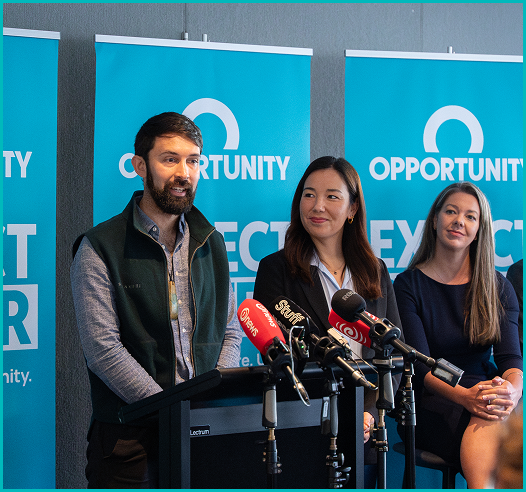

“We have one of the most trusted democracies in the world. Let’s keep it that way”

Three pillars for cleaner politics

Pillar 1

Lobbying in the daylight

Lobbying is a normal part of democracy, but much of it happens out of sight. To bring it into the open, Opportunity will:
  • Introduce a three-year cooling-off period to shut the revolving door between Ministers and lobbying firms.
  • Set up a public, searchable lobbying register and publish ministerial diaries, so Kiwis can see who's lobbying who, how often, and about what.
  • Establish a statutory code of conduct for lobbyists, with real consequences for misconduct, including deregistration and fines.
  • Tighten the rules on gifts, hospitality and travel.

Pillar 2

Get big money out of politics

Political parties should win on their ideas, not the size of their donor lists. To put voters back at the heart of politics, Opportunity will:
  • Cap donations at $30,000 per donor per election, and close common donations loopholes.
  • Ban donations from companies and trusts, so only registered New Zealand voters can donate.
  • Lower disclosure limits, so donations over $1,000 are made public sooner.

Pillar 3

Build a firewall against corruption

We have a responsibility to protect our democracy. To safeguard the integrity and honesty of our political system, Opportunity will:
  • Set up an Independent Commission Against Corruption, modelled on New South Wales, to investigate, expose and prevent political corruption.
  • Hold politicians to the standards of the Fair Trading Act, so misleading or deceptive statements of fact can be investigated and corrected.
  • Protect truth by strengthening the Official Information Act, protecting whistleblowers, and establishing an independent policy costing unit so parties can't fudge the numbers on their promises.

People vote. Lobby groups don’t.

Opportunity will make sure it’s people who fund our politics, not vested interests, through donations that are capped, transparent, and open.

Read our full policy paper

Download PDF

Frequently Asked Questions

How much will Healthy Oceans cost?

This policy includes both operational expenditure and strategic investments that will be largely cost-neutral or positive to the Crown in the long term. Some costs will be able to be cost-recovered from the commercial fishing industry.

In the short term we estimate an overall annual cost to government of no more than $100 million. Larger items within this total include funding for coastal ecosystem restoration, marine research and blue economy development initiatives.

How will this affect recreational fishers?

This policy includes both operational expenditure and strategic investments that will be largely cost-neutral or positive to the Crown in the long term. Some costs will be able to be cost-recovered from the commercial fishing industry.

In the short term we estimate an overall annual cost to government of no more than $100 million. Larger items within this total include funding for coastal ecosystem restoration, marine research and blue economy development initiatives.

How will this affect commercial fishing operators?

This policy includes both operational expenditure and strategic investments that will be largely cost-neutral or positive to the Crown in the long term. Some costs will be able to be cost-recovered from the commercial fishing industry.

In the short term we estimate an overall annual cost to government of no more than $100 million. Larger items within this total include funding for coastal ecosystem restoration, marine research and blue economy development initiatives.

What about iwi interests in commercial fishing?

This policy includes both operational expenditure and strategic investments that will be largely cost-neutral or positive to the Crown in the long term. Some costs will be able to be cost-recovered from the commercial fishing industry.

In the short term we estimate an overall annual cost to government of no more than $100 million. Larger items within this total include funding for coastal ecosystem restoration, marine research and blue economy development initiatives.

What about Māori customary fishing rights?

This policy includes both operational expenditure and strategic investments that will be largely cost-neutral or positive to the Crown in the long term. Some costs will be able to be cost-recovered from the commercial fishing industry.

In the short term we estimate an overall annual cost to government of no more than $100 million. Larger items within this total include funding for coastal ecosystem restoration, marine research and blue economy development initiatives.

What about jobs in fishing communities?

This policy includes both operational expenditure and strategic investments that will be largely cost-neutral or positive to the Crown in the long term. Some costs will be able to be cost-recovered from the commercial fishing industry.

In the short term we estimate an overall annual cost to government of no more than $100 million. Larger items within this total include funding for coastal ecosystem restoration, marine research and blue economy development initiatives.

How does this relate to climate change?

This policy includes both operational expenditure and strategic investments that will be largely cost-neutral or positive to the Crown in the long term. Some costs will be able to be cost-recovered from the commercial fishing industry.

In the short term we estimate an overall annual cost to government of no more than $100 million. Larger items within this total include funding for coastal ecosystem restoration, marine research and blue economy development initiatives.

Other Policies

Join Volunteer Donate